The Ultimate Guide to Vehicle Rentals for Epic Canadian Road Trips
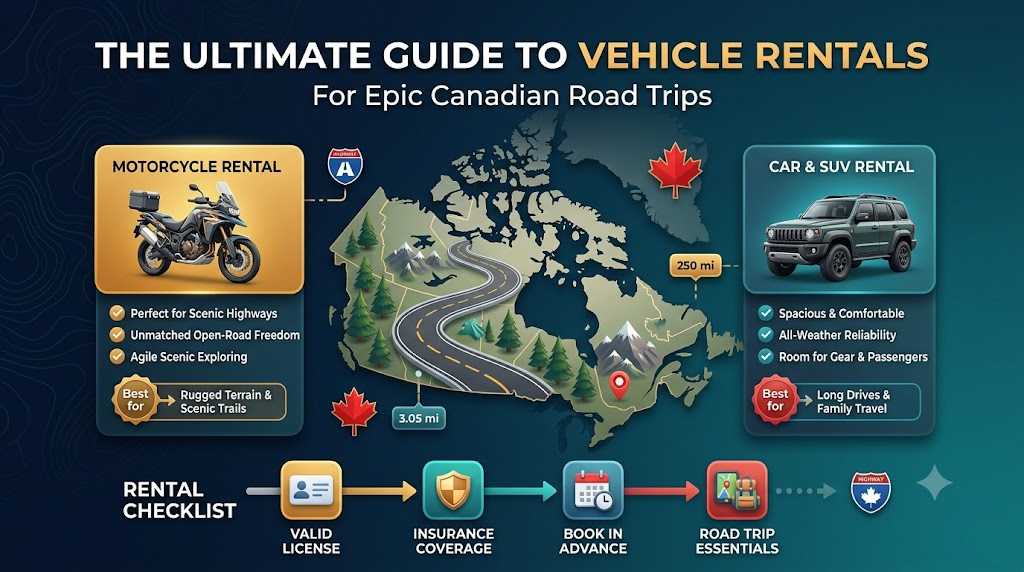
Canada offers some of the most scenic highways in the entire world. Renting a vehicle lets you explore these vast, open roads with total freedom and flexibility. Many travelers face big problems like empty rental counters, confusing insurance rules, and very short summer riding windows. MotoShare.ca solves these issues by offering an easy online marketplace to find cars and motorcycles directly from local hosts. You can pick up a reliable ride in major cities and start your road trip without stress. With a few clicks, you can choose the right vehicle for your budget and schedule. No more long airport lines or sudden hidden fees. You get clear rates and fast booking so you can focus on the open road ahead.
What Is MotoShare.ca?
MotoShare.ca is a Canada-focused online rental marketplace for cars and motorcycles. It connects travelers directly with verified local vehicle owners across major Canadian cities like Toronto, Vancouver, and Calgary.
You can rent commuter bikes, touring machines, adventure bikes, and standard cars for any trip. Verified hosts list their vehicles with honest daily rates and clear rules. Travelers can message hosts directly, check reviews, and book their ride with total confidence.
How to Rent a Motorcycle in Canada
To rent a motorcycle in Canada, you need a valid motorcycle license, a certified helmet, and a credit card for the security deposit. Most rental services require riders to be at least 21 years old.
In Ontario, you need a Class M license. In British Columbia and Alberta, you need a Class 6 license. Foreign riders can use their home motorcycle license with an English translation or international permit. Average security deposits range from $1,000 to $2,500 CAD. Summer bookings fill up fast, so reserve your ride two to four months ahead to safely rent a motorcycle in Canada.
Choosing the Right Motorcycle Rental in Canada
Picking the right motorcycle rental Canada riders trust depends on your planned travel route, weather conditions, and personal comfort. Canada’s main riding season runs from late May to early October.
Cruisers work great for relaxed highway cruising and day trips. Standard street bikes are ideal for busy city streets and short weekend getaways. Touring bikes give you large windscreens, heated grips, and hard luggage cases for multi-day journeys across provinces. Always pick a bike that matches your physical size and skill level so you stay safe on every mile.
City Spotlight: Motorcycle Rental Toronto
A motorcycle rental Toronto service gives you quick access to scenic weekend road trips across Southern Ontario. You can leave the downtown core behind and explore quiet rural roads within an hour.
Popular day trips include the historic town of Niagara-on-the-Lake, the winding curves of Forks of the Credit, and the peaceful lakes of Muskoka. These routes offer smooth asphalt, scenic farm views, and great roadside food stops. Always watch for sudden city traffic delays during Friday rush hours.
City Spotlight: Motorcycle Rental Vancouver
A motorcycle rental Vancouver booking opens up some of the most breathtaking coastal and alpine roads in British Columbia. The city sits right between the Pacific Ocean and towering coastal mountains.
The world-famous Sea-to-Sky Highway takes you from Vancouver straight to Whistler along dramatic ocean cliffs. The road has great pavement, sweeping corners, and clean mountain air. Coastal weather changes quickly, so pack waterproof riding gear even on sunny summer mornings.
Mountain Touring: Motorcycle Rental Calgary
Choosing a motorcycle rental Calgary riders prefer is the fastest way to explore the rugged Canadian Rocky Mountains. Calgary sits just an hour east of massive mountain peaks.
From Calgary, you can ride directly into Banff National Park and Jasper National Park. You can cruise along the famous Icefields Parkway to view giant glaciers and clear blue alpine lakes. Summer mornings can bring near-freezing temperatures, so bring warm layers and check for mountain wildlife on the roadway.
Table 1: Motorcycle Categories vs Canadian Routes
| Motorcycle Category | Ideal Riding Style | Iconic Canadian Route | Primary Practical Advantage |
| Touring Bike | Long-distance highway comfort | Trans-Canada Highway | Large hard cases for luggage and warm heated hand grips |
| Adventure (ADV) Bike | Mixed asphalt and gravel roads | Icefields Parkway & mountain backroads | Tall ground clearance and tough, long-travel suspension |
| Cruiser | Relaxed, low-speed scenic riding | Niagara Parkway (Ontario) | Low seat height and very comfortable seating position |
| Standard / Street | Daily city commuting and short trips | Vancouver to Whistler (Sea-to-Sky) | Light frame weight and nimble handling in traffic |
Local Searches: Motorcycle Rental Near Me
Searching for a motorcycle rental near me helps you find neighborhood hosts with flexible pickup spots close to your home or hotel. This saves you from taking expensive taxi rides to busy airport counters.
You can view verified host profiles, read honest reviews from other riders, and see clear photos of the exact bike. Identity checks happen online before you arrive. This means you can pick up your keys, inspect the bike, and hit the road within minutes.
Riding Off-Pavement: Adventure Motorcycle Rental Canada
An adventure motorcycle rental Canada option gives you a dual-sport bike built for both smooth pavement and loose gravel trails. Dual-sport bikes feature tough frames and tall tires that handle bumps easily.
These bikes let you explore remote backroads across British Columbia, Alberta, and Northern Ontario without worry. Essential gear for adventure riding includes a sturdy waterproof jacket, tall boots, a tire patch kit, and offline GPS maps. Mountain passes often lack cell phone service, so plan your fuel stops carefully before you head out.
Step-by-Step Guide: Planning a Motorcycle Road Trip Canada
Planning an epic motorcycle road trip Canada adventure requires five simple steps:
- Pick your seasonal window: Ride between late June and early September for the best weather and open mountain passes.
- Map your fuel stops: Gas stations in remote regions can sit over 150 km apart, so never pass an open pump.
- Pack warm riding layers: Mountain temperatures can drop near zero even in July, so pack thermal base layers.
- Carry wildlife safety gear: Keep bear spray handy when stopping at rest areas in national parks.
- Book your night stays early: Mountain campsites and roadside motels sell out months in advance during peak summer.
Expert Touring Advice & Original Insights
Mountain weather in Canada shifts rapidly without warning. You can start your morning in bright sunshine and hit cold rain or sleet an hour later. Always check your tire air pressure every morning before you ride, because cold mountain nights drop tire pressure fast.
Veteran Canadian tour guide Marc Tremblay shares this important tip: “Always scan road shoulders for large wildlife like elk and deer at sunrise and dusk. Give animals plenty of space, and never brake hard on wet road markings.”
Four-Wheel Convenience: Car Rental Canada
A car rental Canada service is often the smartest choice when traveling with family, carrying heavy camping gear, or touring in chilly spring and autumn months.
Enclosed cars protect you from sudden rain, cold wind, and mountain snow. Modern rental cars come with great heating, air conditioning, and plenty of trunk space for large suitcases. Cars also allow you to share driving duties with another person so nobody gets tired during long travel days across Canada.
Exploring Ontario on Four Wheels: Car Rental Toronto
Booking a car rental Toronto ride makes it easy to take memorable family road trips across Ontario. You can comfortably fit your loved ones and all their bags into a clean, safe vehicle.
Top driving routes include scenic weekend trips to Algonquin Provincial Park to view wildlife, or quiet drives through Prince Edward County for local farm food. A reliable car gives you peace of mind during sudden summer rainstorms and heavy highway traffic.
Table 2: Pre-Ride Vehicle Inspection Checklist
| Inspection Check | What to Verify Before Leaving | Warning Sign | Real-World Safety Impact |
| Tires & Wheels | Check tread depth and air pressure (cold) | Cracks in rubber or low air | Prevents dangerous highway blowouts at high speeds |
| Brake Levers & Pads | Pull levers to test firm stopping feel | Soft, spongy levers or squeaking pads | Ensures fast, reliable emergency stops in traffic |
| Engine Oil & Coolant | Check fluid sight glasses and dipsticks | Dark leaks under the engine block | Stops engine overheating in remote, empty areas |
| Headlights & Turn Signals | Test high beams, low beams, and signals | Blinking fast or dead bulbs | Keeps you visible to other drivers in rain or dark |
| Drive Chain or Belt | Check chain slack and clean lubrication | Loose, dry, or rusty links | Prevents broken chains from locking the rear wheel |
Real-Life Case Studies & Use Cases
- Case 1 (Beginner in the Rockies): An international tourist needed an easy way to tour the Canadian Rockies. Action: He rented an adventure bike in Calgary and took a slow mountain route. Outcome: He safely explored Banff and Jasper without getting stranded on rough gravel roads.
- Case 2 (Toronto Professional): A busy city worker wanted a quick weekend fall getaway without owning a bike year-round. Action: He booked a cruiser through a local host for two days. Outcome: He enjoyed the bright fall colors in Muskoka and returned the bike on Sunday evening.
- Case 3 (Vancouver Family Trip): A couple with two children wanted to see the Pacific coast in cool autumn weather. Action: They booked an all-wheel-drive SUV rental in Vancouver. Outcome: They drove the Sea-to-Sky route warmly and safely with all their family luggage.
- Case 4 (Local Commuter): A local rider wanted to buy a new street bike but worried about seat comfort. Action: He rented the exact same model for a two-day trial run. Outcome: He tested the bike on highway commutes and made a smart buying choice.
8 Costly Mistakes to Avoid When Renting Vehicles
- Forgetting Proper License Endorsements: Standard car licenses do not allow you to ride motorcycles in Canada. Solution: Verify your motorcycle endorsement or foreign permit before you book your trip.
- Skipping Walkaround Photos: Failing to record existing scratches can cause unfair damage claims later. Solution: Take clear photos and a walkaround video of the vehicle before leaving the pickup spot.
- Ignoring Sudden Mountain Cold: Mountain air turns chilly quickly, even in the middle of summer. Solution: Pack a thermal windproof layer and warm waterproof gloves inside your travel pack.
- Disregarding Daily Distance Limits: Driving past your agreed daily kilometers creates expensive penalty fees. Solution: Calculate your total trip kilometers early and select a rental plan with unlimited distance.
- Missing Bear Safety Precautions: Leaving sweet food inside open vehicles can attract hungry wild bears in national parks. Solution: Lock all snacks inside airtight car trunks and carry bear spray on hikes.
- Booking at the Last Minute: July and August see high demand for vehicles across Canada. Solution: Reserve your rental vehicle at least eight weeks ahead to secure good rates.
- Using Unapproved Helmets: Novelty beanies are illegal and do not protect your head during crashes. Solution: Always wear a certified DOT or ECE approved helmet on Canadian public roads.
- Ignoring Security Deposit Rules: Not checking credit card limits can stop your vehicle pickup on day one. Solution: Ensure your credit card has enough open limit to cover the full deposit hold.
The MotoShare 7-Step Rental Framework
Follow this simple framework to book your vehicle smoothly:
Step 1: Pick Route → Step 2: Choose Vehicle → Step 3: Verify License → Step 4: Check Insurance → Step 5: Reserve Early → Step 6: Complete Inspection → Step 7: Ride Safely
- Step 1: Select your travel destination, daily driving distances, and road types.
- Step 2: Pick a vehicle that fits your passenger count, gear, and comfort needs.
- Step 3: Confirm your driver’s license meets Canadian provincial rules.
- Step 4: Review the host’s insurance coverage and road protection terms.
- Step 5: Book your dates early to lock in your preferred vehicle.
- Step 6: Inspect the vehicle carefully and take clear walkaround photos.
- Step 7: Follow local speed limits, watch for wildlife, and enjoy your trip.
How MotoShare.ca Fits Into Your Canadian Journey
MotoShare.ca makes discovering and renting vehicles in Canada simple, clear, and fair. The platform connects you with trusted local hosts who take pride in their cars and bikes. You get upfront daily prices with no hidden desk fees. Direct messaging allows you to ask questions about the vehicle before you leave. Whether you need an agile motorcycle for mountain curves or an SUV for a cross-country family road trip, MotoShare.ca helps you find the right vehicle for an unforgettable adventure.
Frequently Asked Questions
1. What license do I need to rent a motorcycle in Canada?
You need a valid, full motorcycle driver’s license to rent a motorcycle in Canada. In Ontario, this is a Class M license. In British Columbia and Alberta, you need a full Class 6 license. Learner permits are not accepted by rental hosts. Visitors from other countries can use their home country motorcycle license if it is printed in English or French.
2. Can international tourists rent a motorcycle in Canada?
Yes, international tourists can legally rent and ride motorcycles across Canada. You must have a valid motorcycle license from your home country. If your home license is not in English or French, you must carry an International Driving Permit alongside your original card. Always bring your passport and a major credit card under your legal name when picking up your vehicle.
3. What is the minimum age to rent vehicles on MotoShare.ca?
The standard minimum age to rent a vehicle on MotoShare.ca is 21 years old. Some high-power sports motorcycles or premium luxury cars may require drivers to be at least 25 years old. Younger drivers between 21 and 24 might also have a small daily young-driver fee added to their booking. Always check the specific host’s listing requirements before finalizing your booking.
4. How does insurance coverage work for vehicle rentals?
Rental bookings include third-party liability insurance to meet Canadian provincial legal rules. Physical damage coverage for the rented vehicle is also included based on the protection tier you select at checkout. This coverage protects against collision damage and theft, subject to a fixed deductible fee. You must always follow standard road laws to keep your insurance protection fully active during your trip.
5. What safety gear is legally required when riding across Canada?
Canadian law strictly requires every motorcycle rider and passenger to wear an approved safety helmet. Your helmet must show an official DOT, ECE, or Snell certification sticker. While eye protection, leather jackets, sturdy riding pants, and over-the-ankle boots are not legally required by police in every province, wearing them is strongly advised to protect you from road debris and weather.
6. When is the best time of year for a motorcycle road trip in Canada?
The best time for a motorcycle road trip in Canada is between late June and early September. During these peak summer months, mountain passes are free of snow, days are long, and roads stay dry. High alpine routes in Alberta and British Columbia can get freezing weather in May and October. Summer offers the safest and warmest riding weather across all provinces.
7. Are security deposits required when booking a bike?
Yes, a refundable security deposit hold is required for every motorcycle rental booking. The host places a temporary pre-authorization hold on your credit card when you pick up the bike. This hold usually ranges from $1,000 to $2,500 CAD depending on the bike model. The hold gets released back to your card balance once you return the bike without any new damage.
8. Can I take a rental vehicle across provincial borders?
Yes, most hosts allow you to travel freely between Canadian provinces during your rental period. For example, you can rent a vehicle in Calgary and drive into British Columbia. However, you should always inform your host about your planned route before starting your trip. This ensures your roadside assistance plan and insurance coverage stay active across every province you plan to visit.
9. What happens if a rented motorcycle breaks down on a highway?
If your rental motorcycle breaks down, park safely on the right shoulder and call the emergency assistance number. MotoShare.ca bookings offer access to roadside support for flat tires, dead batteries, and mechanical failures. Do not try to repair mechanical parts yourself. Contact your host right away so they can help arrange a local repair shop or provide a replacement ride.
10. Is an adventure motorcycle necessary for riding in the Canadian Rockies?
No, you do not need an adventure motorcycle to enjoy the main highways through the Canadian Rockies. Paved roads like the Icefields Parkway and Trans-Canada Highway are smooth and suit cruisers, touring bikes, and standard cars. However, an adventure bike is very helpful if you plan to explore unpaved mountain access roads, loose forestry service trails, or rocky backcountry viewpoints.
11. Can I rent both cars and motorcycles on MotoShare.ca?
Yes, MotoShare.ca offers both car and motorcycle rentals across many Canadian cities. You can rent a motorcycle for solo sunny weekend fun, or rent an SUV or sedan for family vacations and rainy days. The booking system lets you switch between vehicle categories easily. This gives travelers full flexibility to choose the best vehicle for their specific travel plans and weather conditions.
12. How does MotoShare.ca verify its vehicle hosts?
MotoShare.ca verifies every host through a strict identity and vehicle check process. The platform checks the owner’s legal driver’s license, proof of vehicle ownership, and active registration documents. Vehicles must pass regular safety checks and maintain clean maintenance logs before they can be listed. Guest reviews also hold hosts to high standards of vehicle cleanliness, communication, and mechanical reliability.
Conclusion
Exploring Canada on two or four wheels is one of the most exciting ways to travel. From the tall coastal trees of British Columbia to the wide mountain passes of Alberta and the rolling hills of Ontario, our open highways offer memories that last a lifetime. A smooth and memorable journey comes down to smart planning, having the correct provincial driver’s license, and carrying out a careful vehicle inspection before every trip. By using a community-focused vehicle rental marketplace like MotoShare.ca, you can find well-maintained cars and motorcycles from local hosts who love the open road as much as you do. Take your time, ride with care, and enjoy every scenic kilometer ahead.
Leave a Reply