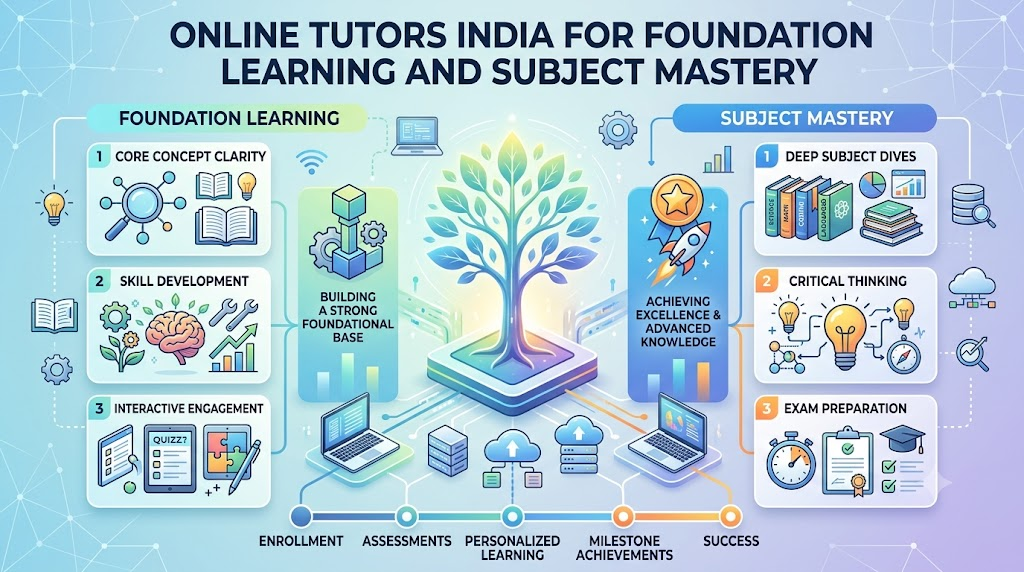
Online Tutors India for Foundation Learning and Subject Mastery
Every parent knows this moment. Twenty browser tabs open, three WhatsApp groups giving conflicting advice, and still no clear answer. One tutor promises results in a month. A coaching centre claims a hundred percent selection rate. A college brochure talks about “world-class placements” but never shares actual numbers. If this sounds familiar, you’re not alone. Education decisions in India often come wrapped in noise — ads, opinions, and half-true reviews all mixed together. What actually helps is slow, honest digging. Comparing real details instead of catchy taglines. That’s the exact gap a platform like GurukulGalaxy.com tries to fill. It works as a discovery space where students and parents can browse tutors, coaching institutes, and colleges side by side, before locking in any big decision.
What Exactly Is GurukulGalaxy.com
Think of it as a map, not a decision-maker. GurukulGalaxy.com brings together listings for tutors, coaching centres, and colleges from across India, all in one browsable space. There’s no pushy sales pitch here — just profiles, basic details, and a way to reach out directly if something catches your eye. The platform doesn’t tell you what’s “best.” It simply hands you enough information to judge that for yourself.
Why So Many Families Now Find Tutors Online
Why has “find tutors online” become such a common search? Simple — the internet doesn’t limit you to whoever happens to live nearby. You could find a chemistry expert three states away, or a spoken-English coach who only teaches evenings. When comparing profiles, don’t just stop at the first decent-looking one. Check subject depth, actual teaching experience, fee range, and available slots. Teaching style matters too. A tutor who rushes through topics might suit a fast learner but frustrate someone who needs more repetition.
Online Isn’t Just a Backup Option Anymore
Sessions can be recorded for revision later. Fees are usually listed upfront, with fewer surprises. But still ask for a trial class before paying for a full package — a resume looks good on paper, but teaching style only shows up in a real session.
When Families Still Want to Find Tutors Near Me
Not everyone wants a screen between the teacher and the student. That’s exactly why so many still search to find tutors near me, especially for younger kids who need someone physically present to stay on track. Local tutoring makes sense for hands-on subjects, like handwriting practice or lab-based science. Before locking in a home tutor, though, think about the daily commute. A great teacher who takes ninety minutes to reach your house might not be worth the trade-off. Ask upfront about home-visit charges too, since these usually cost more than online sessions. At the same time, don’t dismiss what online tutors India has to offer — many are highly experienced and teach students across several cities at once.
Table 1: Tutor Selection Factors
| What to Check | Online Tutor | In-Person Tutor | Why It Counts |
|---|---|---|---|
| Commute | Not needed | Depends on location | Saves daily time and energy |
| Pricing | Usually lower | Usually higher | Shapes your monthly budget |
| Subject Options | Very broad | Limited to your area | Wider pool means better matches |
| Monitoring | Needs parent check-ins | Easier to observe directly | Helps younger kids stay disciplined |
| Rescheduling | Simple and flexible | Harder to adjust | Matters when plans change often |
Searching for Coaching Institutes Near Me
When exam prep gets serious, group coaching usually enters the picture. That’s when the search for coaching institutes near me typically begins. Before enrolling anywhere, ask about batch strength first — a class of fifteen behaves very differently from a class of eighty. Look at their study material too; messy, disorganised notes are a warning sign. Ask how often they run practice tests, since regular testing is what actually builds exam temperament. Compare fees across a few centres, but don’t let price alone make the decision. The cheapest option sometimes costs more in wasted time, and the priciest one doesn’t always teach better.
Chasing the Best Coaching Institutes in India
Big coaching chains are everywhere, and it’s tempting to just search for the best coaching institutes in India and pick whatever tops the list. But here’s the catch — a well-known brand can have wildly different quality across its branches. The teacher assigned to your local branch matters far more than the chain’s national reputation. Before joining, ask specifically about that branch’s recent results, not the brand’s overall marketing claims.
Starting Your College Search India Journey
Once school ends, the real work of college search India begins, and it can feel like an entirely new maze. Which course actually fits your interests? Which degree opens the doors you’re aiming for? What are the eligibility cutoffs, and what will it truly cost once hostel fees and lab charges get added in? Start broad. Build a list of eight or ten colleges, then narrow it down gradually as you learn more about each one.
Don’t Overlook the Smaller Names
Good colleges exist far beyond the famous few. Some lesser-known institutions have stronger placement records and better facilities than their more “popular” counterparts. Widening your list often widens your options too.
Why You Should Compare Colleges and Courses Closely
A shiny name on a college gate doesn’t guarantee a great classroom experience inside it. That’s why you need to compare colleges and courses on details that actually matter — faculty background, lab quality, internship tie-ups, and how updated the syllabus really is. Two colleges can offer the exact same course title and still deliver very different levels of learning.
Table 2: College and Course Research Factors
| Comparison Factor | College One | College Two | Why It Matters |
|---|---|---|---|
| Syllabus | Recently updated | Unchanged for years | Keeps you job-ready |
| Faculty | Industry-experienced | Mostly theoretical | Affects real-world learning |
| Placements | Active, well-connected | Weak or inactive | Impacts job search later |
| Fees | Reasonable | On the higher side | Affects family finances |
| Campus | Modern, well-kept | Needs upgrades | Shapes daily student life |
Making Sense of Competitive Exams in India
Careers in government service, engineering, medicine, and law usually run through some kind of gatekeeping test. So it helps to understand competitive exams in India well before exam season. Most follow a two or three-stage format — a written screening round first, sometimes a deeper subject test next, and occasionally a final interview or document check. Eligibility rules differ by exam too; some set an age limit, others require specific school marks. Learning this structure early means planning your study calendar around facts, not guesswork.
A Few Real Situations Families Face
- A father enrolled his son in a coaching centre just because a colleague’s kid joined the same one, only to find the assigned teacher had recently resigned.
- A student picked an engineering college purely for its famous name, then realised mid-year that her specific branch had outdated lab equipment.
- A mother hired the cheapest home tutor available without checking credentials, and later found out he’d never taught that grade level before.
- A boy skipped studying the exam pattern entirely, assuming all tests look similar, and was caught off guard by a completely different question format on the actual day.
A 10-Step Competitive Exam Preparation Roadmap
- Read the full syllabus and exam pattern before opening any book.
- Build a study timetable that actually fits your real routine.
- Tackle weaker topics first, instead of only revising favourites.
- Rely on trusted study material, not random internet shortcuts.
- Sit for timed mock tests on a regular basis.
- Go back and study every mistake from each mock test.
- Join a coaching group or study circle if you’re struggling alone.
- Schedule short breaks so you don’t burn out halfway through.
- Track your progress honestly every couple of weeks.
- Spend the final month purely on revision, not new topics.
This roadmap keeps competitive exam preparation steady, instead of a last-minute scramble.
Life After School: Competitive Exams After 12th
Right after boards, students face a wave of competitive exams after 12th — engineering entrances, medical tests, law entrances, design aptitude exams, and various government exams. It’s tempting to jump into whichever path feels familiar, often because a friend chose it too. Instead, spend a few weeks genuinely exploring two or three options. Talking to someone who’s already cleared that exam usually teaches you more than any glossy brochure ever could.
Mistakes Worth Avoiding
- Picking a tutor or institute purely because of a low price tag.
- Never checking a tutor’s real teaching background or credentials.
- Overlooking daily travel time when choosing a coaching centre.
- Assuming a big brand name guarantees good teaching at every branch.
- Joining a batch without asking how many students are actually in it.
- Judging colleges only by ranking charts instead of course content.
- Forgetting hidden costs like hostel fees, lab charges, or exam fees.
- Delaying exam preparation until it’s almost too late to catch up.
- Choosing a course just because friends chose it, not because it fits.
- Trusting glossy ads over genuine student reviews or direct conversations.
Where GurukulGalaxy.com Fits Into All This
Research eats up time, and that’s the exact problem GurukulGalaxy.com tries to solve. Instead of hopping between dozens of scattered websites, you get tutors, coaching institutes, and colleges gathered in one browsable space. Many profiles carry basic verification details, so you’re not starting from zero. If something interests you, you can send a direct enquiry right there instead of hunting for a contact number. It won’t make the decision for you, but it does hand you a shorter, cleaner starting point.
A Simple Search Plan You Can Reuse Every Time
Whatever you’re searching for — a tutor, a coaching class, or a college — this flow works every time: Goal → Get clear on what you actually need. Search → Explore every option that fits that need. Shortlist → Narrow it down to your top few. Compare → Weigh fees, quality, and outcomes against each other. Ask → Reach out directly with specific questions. Verify → Cross-check claims through reviews or real conversations. Decide → Commit once you genuinely feel confident.
Frequently Asked Questions
Question 1: Is it safe to find tutors online these days?
Generally yes, if you do a little homework first. Look for tutors who share clear details about their experience and subject expertise. Read reviews if the platform offers them. Always request a short trial class before paying for a full package. Confirm the fee structure and refund policy in advance, and a quick video call beforehand helps you judge comfort level and teaching style.
Question 2: How different are online tutors from tutors who visit home?
Online tutors connect through video calls, offering flexible timing and access to teachers from anywhere in the country. Home tutors visit physically, which often helps younger children stay attentive. Online sessions are usually cheaper and easier to reschedule. Home tutoring adds travel time and slightly higher fees. The right pick depends on your child’s age, focus levels, and how packed your daily schedule already is.
Question 3: What should I check before joining a coaching institute near me?
Start by asking about batch size, since smaller groups usually mean more attention per student. Check the quality of their study notes and how often they run mock tests. Visit the centre in person if possible, and observe a live class. Talk to current students for honest feedback instead of relying only on advertisements or brochures handed to you at the front desk.
Question 4: Does joining one of the best coaching institutes in India guarantee good results?
Not necessarily. Large coaching chains can have excellent results in some branches and mediocre ones in others, depending entirely on local faculty. National reputation doesn’t automatically apply to every centre under that brand name. Always ask about the specific branch’s recent results and the experience level of teachers actually assigned there before signing up.
Question 5: Where should I start my college search India journey?
Begin by listing your genuine interests and long-term goals, not just popular course names. Research which courses align with those interests, then check eligibility rules for each one. Compare total costs, including hostel and lab fees, not just tuition. Build a shortlist of eight to ten colleges initially, then narrow it down as you gather more real details.
Question 6: Why compare colleges and courses instead of trusting rankings alone?
Rankings capture only part of the picture and often miss details that matter most day-to-day. Two similarly ranked colleges can differ hugely in faculty quality, lab facilities, and placement support. Always dig into the actual syllabus and teaching methods before deciding. A lower-ranked college with strong practical training sometimes suits you better than a higher-ranked one running an outdated curriculum.
Question 7: What stages should I expect in competitive exams in India?
Most competitive exams run through two or three stages. The first usually screens candidates through a written test. A second stage may dig deeper into specific subject knowledge. Some exams add a final interview or document check. Difficulty typically rises with each stage, so understanding this structure ahead of time helps you plan study hours sensibly across every phase.
Question 8: When should competitive exam preparation actually begin?
Ideally, give yourself six months to a full year before the exam date. This window allows enough time to finish the syllabus properly, attempt regular mock tests, and revise weaker areas without rushing. Starting too late usually leads to incomplete coverage and unnecessary stress. Early preparation also builds stronger fundamentals instead of forcing last-minute cramming.
Question 9: Which competitive exams after 12th are worth exploring?
It depends entirely on your interests and strengths. Engineering aspirants usually target technical entrance exams, while medical aspirants prepare for biology-focused national tests. Other paths include law entrances, design aptitude tests, and government service exams. Rather than locking into one option immediately, spend time exploring two or three paths and talking to seniors who’ve already cleared them.
Question 10: What’s the most common mistake families make during this process?
The biggest one is trusting claims without checking them properly. Many families select a tutor, institute, or college based purely on an advertisement or a single friend’s recommendation. Skipping background checks or ignoring hidden charges often leads to regret later. Always verify information directly, ask pointed questions, and compare multiple options before making any final commitment.
Question 11: How exactly does GurukulGalaxy.com support this search process?
It works as a discovery platform, gathering tutors, coaching institutes, and colleges into one browsable space instead of scattered websites. Many listed profiles include basic verification details to help with early screening. You can send direct enquiries through the platform whenever something interests you. It speeds up research considerably, though the final decision and fact-checking still remain your own responsibility.
Question 12: Is there a simple framework to make the right education choice?
Yes — follow seven straightforward steps. Set a clear goal first, then search broadly for matching options. Shortlist your strongest few choices and compare them on fees, quality, and outcomes. Reach out with direct questions to each one. Verify every claim through reviews or real conversations. Finally, decide once you feel genuinely confident. This structure keeps the whole process organised and far less stressful.
Final Thoughts
Choosing a tutor, a coaching class, a college, or an exam path is rarely a snap decision, and it shouldn’t be. Start by getting clear on your actual goal. Search widely, both nearby and online. Build a shortlist, then compare real details instead of catchy promises. Ask direct questions before committing any money. Always verify what you’re told, rather than accepting it at face value. Platforms like GurukulGalaxy.com can make this journey a little easier by bringing options together in one place. But the final judgment call still belongs to you and your family. Stay patient, stay curious, and let honest comparison guide every step.
Leave a Reply