Comparing IVF Clinics Using Treatment, Cost and Success Rate Information
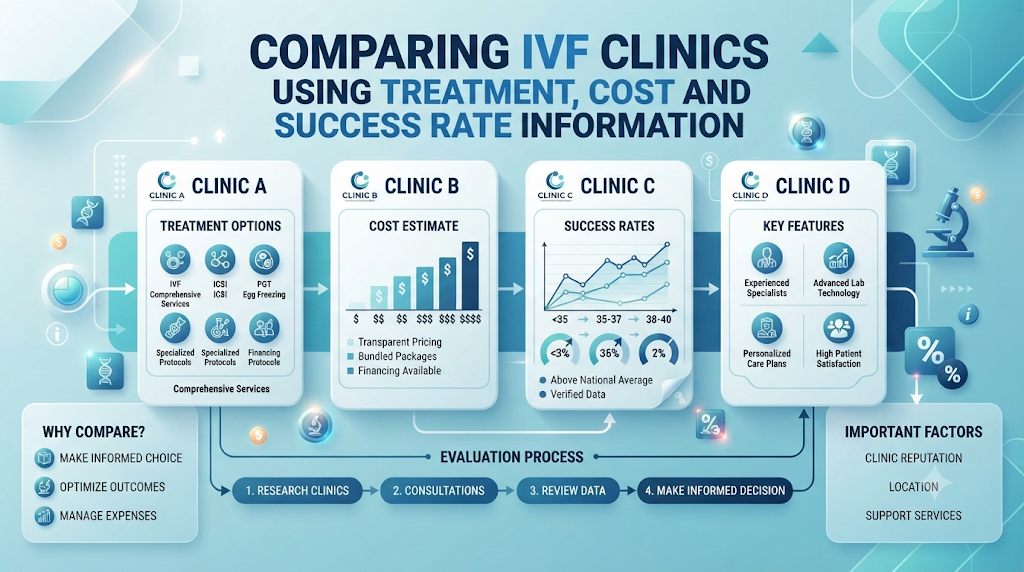
Starting a search for fertility help can feel like a lot. One day you feel hopeful. The next day you feel lost in numbers, medical words, and clinic ads that all sound the same. Many people say the hardest part is not the treatment itself. It is finding honest prices and real success numbers before they even meet a doctor. Clinic websites often show best-case results, not the full picture. This makes it hard to plan your money and your time. That is where a calm, independent guide can help. IVFHospitalsNow.com was built for this exact reason. It does not run a clinic or sell treatment. It simply helps you understand your choices, compare costs, and ask better questions, so you can walk into any clinic feeling ready, not confused.
What is IVFHospitalsNow.com
IVFHospitalsNow.com is a research and education website, not a hospital or clinic. Think of it as a guidebook that sits between you and the many clinics out there. It brings together plain-language explanations, cost breakdowns, and side-by-side clinic information in one place. It does not push you toward one provider or earn money by selling treatment. Its only job is to help you understand your options clearly, so that when you do talk to a real doctor, you already know what questions to ask and what answers to expect. This kind of neutral ground is rare in the fertility world, where most information comes from a business trying to get your booking.
Understanding Your Treatment Pathways
Fertility care is not one single treatment. It is a set of paths, and each one fits a different situation. Learning your fertility treatment options early helps you avoid wasted time and money.
- IUI (Intrauterine Insemination): Sperm is placed directly into the uterus around the time of ovulation. It is simpler and cheaper, often tried first for mild issues.
- IVF (In Vitro Fertilization): Eggs are collected and fertilized with sperm in a lab. The resulting embryo is placed back into the uterus. This is used for more complex cases.
- Egg or Embryo Freezing: Eggs or embryos are frozen for future use, often chosen for medical or personal timing reasons.
- Donor-Assisted Treatment: Donor eggs, sperm, or embryos are used when a person’s own cells are not likely to succeed.
Your doctor usually suggests a path based on age, test results, and how long you have been trying to conceive. No single path is “better” for everyone. It depends on your body and your goals.
Comparing Key Lab Techniques: ICSI vs IVF
Many people mix up these two terms, so let us make it simple. In standard IVF, eggs and sperm are placed together in a dish, and fertilization happens on its own. In ICSI, a single healthy sperm is picked and injected directly into the egg using a very fine needle.
When you look at ICSI vs IVF, the choice usually comes down to sperm quality. If sperm count or movement is low, ICSI gives fertilization a better chance because it removes the need for sperm to reach the egg naturally. If sperm quality is normal, standard IVF often works just as well and can cost a bit less. Your embryologist will usually recommend one after reviewing a semen analysis report, so this is not something you need to decide alone.
Preserving Fertility for the Future
Fertility does not stay the same forever, and many people now choose to freeze their eggs while they are younger and healthier, to keep more options open later. This is often called fertility preservation.
Planning ahead matters here. The egg freezing cost usually covers three parts: the stimulation and retrieval procedure, the lab work to freeze the eggs safely, and yearly storage fees after that. Many people forget about the yearly storage cost and are surprised when the bill returns each year. Timing also matters. Doctors generally suggest freezing eggs before age 35 for better results later, though this varies from person to person. Before committing, ask exactly how long the clinic will store your eggs for the base fee, and what happens if you want to move them to another clinic later.
Finding Care Close to Home
IVF is not a one-day visit. It needs several appointments over two to three weeks for monitoring, scans, and blood tests. This is why location matters so much.
When you search for IVF clinics, do not only look at success numbers. Also check how far the clinic is from your home, since you may need to visit every two to three days during a treatment cycle. Searching for IVF clinics near me can help you shortlist places that make frequent visits realistic, especially if you have a job or cannot travel often. If you plan to combine a local clinic for monitoring with a specialist clinic elsewhere for the actual procedure, ask both teams if they are willing to coordinate and share reports with each other.
Table 1: Fertility Treatment & Planning Factors
| Treatment Type | Primary Purpose | Key Stage | Practical Tip |
|---|---|---|---|
| IUI | Place sperm directly in uterus | Ovulation tracking | Best tried before moving to IVF, if age and diagnosis allow |
| IVF | Fertilize egg and sperm outside the body | Egg retrieval and embryo transfer | Ask how many embryos are usually transferred per cycle |
| ICSI | Inject single sperm into egg | Lab fertilization stage | Confirm if this is included in your base IVF fee or billed extra |
| Egg Freezing | Preserve eggs for later use | Ovarian stimulation and freezing | Ask about yearly storage cost, not just the first-year price |
| Donor-Assisted IVF | Use donor eggs, sperm, or embryos | Donor screening and matching | Check the clinic’s donor screening and legal rules |
Breaking Down Treatment Expenses
One of the most confusing parts of this journey is the bill itself. A single quote rarely tells the full story. Understanding the IVF treatment cost means looking at every piece separately, not just the headline number.
A typical cycle usually includes these parts:
- Base procedure fee: covers monitoring visits, egg retrieval, lab fertilization, and embryo transfer.
- Medications: hormone injections used to stimulate the ovaries, often one of the most changeable costs.
- Diagnostic tests: blood work, hormone panels, and scans done before and during the cycle.
- Lab add-ons: such as ICSI, genetic testing of embryos, or assisted hatching, usually billed on top of the base fee.
- Freezing and storage: if you choose to freeze extra embryos or eggs for later use.
Many clinics advertise only the base procedure fee to look more affordable, then add medications and lab work later. Always ask for a full written quote that lists every possible extra charge before you commit.
Evaluating Cross-Border Care
Because fertility treatment can be costly at home, many people start looking at IVF treatment abroad as a way to lower expenses or reach donor options that may be limited where they live.
Looking at IVF cost by country shows big differences. Countries in Western Europe and North America tend to charge more per cycle, while parts of Eastern Europe, Latin America, and Asia often charge noticeably less for a similar procedure, though exact figures always depend on the clinic and what is included. Some countries are also chosen for reasons beyond price, such as more open rules around egg donation or shorter waiting times. However, remember that a lower clinic fee does not always mean a lower total cost. Flights, hotel stays, time away from work, and follow-up care back home can quietly add a large amount to your final spend.
Understanding Clinic Results Without the Hype
Success numbers are often the first thing people check, and also the most misleading, if not read correctly. There is a big difference between a pregnancy rate and a live birth rate, and clinics do not always make this clear.
When comparing IVF success rates, always ask whether the number shown is a “clinical pregnancy rate” (a pregnancy is confirmed) or a “live birth rate” (a baby is actually born). These can be quite different. Age also changes everything. Success is generally highest for patients under 35, and it drops in a steady pattern as age increases, especially after the late 30s. A clinic with a high overall number may simply be treating more younger patients, not doing better medicine. Always ask for age-based results, not just one combined percentage.
How to Objectively Compare Centers
Once you have a shortlist, the real work of choosing begins. Knowing how to compare IVF clinics fairly can protect you from choosing based on marketing alone.
Start by checking accreditation. A recognized fertility body or health authority should have reviewed the clinic’s lab and safety standards. Next, ask about their lab technology, such as how embryos are monitored and stored, since older equipment can affect results. Finally, always dig into hidden medication fees. Two clinics can quote a similar base price, but one may include medications while the other bills them fully on top, making the “cheaper” option end up costing more overall.
Table 2: Clinic Comparison Checklist
| Evaluation Factor | What to Check | Why It Protects the Patient |
|---|---|---|
| Accreditation | Recognized certification or licensing body | Confirms basic safety and quality standards are met |
| Success Rate Reporting | Age-based live birth rates, not just one average | Prevents comparing unlike patient groups unfairly |
| Lab Technology | Equipment used for embryo monitoring and freezing | Better technology can improve embryo survival and results |
| Full Cost Breakdown | Written quote covering meds, tests, and add-ons | Avoids surprise bills after treatment has already started |
| Communication & Support | How questions are answered before you sign up | Shows how you will be treated during a stressful process |
Real-Life Scenarios: Patient Journeys
- A couple in their mid-30s plans for two possible IVF cycles, not just one, and sets aside a budget that covers medications for both attempts in advance.
- A woman freezing her eggs for career reasons chooses a clinic close to home for monitoring visits, since she cannot take many days off work.
- A couple exploring treatment abroad books their procedure a month after their first consultation, to allow time for diagnostic test results to come back and be reviewed properly.
- A single woman using donor sperm spends extra time checking a clinic’s donor screening rules before signing any paperwork, since these rules differ by country.
Common Mistakes to Avoid in Fertility Research
- Trusting a base quote that excludes medications – always ask if the number includes drugs or not.
- Comparing raw success percentages without checking age groups – a young patient’s clinic will always look better on paper.
- Ignoring yearly storage renewal fees for frozen eggs or embryos, which add up over several years.
- Skipping donor screening and legal checks when using donor eggs, sperm, or embryos.
- Not asking how many embryos are typically transferred, which can affect both success chances and health risks.
- Forgetting travel and stay costs when comparing treatment abroad to treatment at home.
- Choosing a clinic only by price, without checking accreditation or lab quality.
- Not preparing questions before the first consultation, which often leads to rushed decisions.
- Assuming one failed cycle means the whole plan has failed, when many people need more than one attempt.
- Not confirming report-sharing between two clinics when combining local monitoring with treatment elsewhere.
How IVFHospitalsNow.com Can Help
IVFHospitalsNow.com was built to sit quietly on your side through all of this. It offers clear cost breakdowns that show what is usually included and what is often billed separately, so you are not caught off guard later. Its provider directories are written for learning, not for selling, helping you understand what different clinics generally offer before you ever make a call. It also provides question-preparation guides, so you walk into your first consultation with a clear list in hand, instead of trying to remember everything on the spot. The goal is simple: help you feel informed, not sold to.
A Simple 7-Step Research Roadmap
- Goal: Define what you are trying to achieve, whether it is starting treatment, freezing eggs, or exploring options.
- Search: Gather a wide list of possible clinics or paths, without narrowing down yet.
- Shortlist: Pick three to five options that fit your budget, location, and treatment needs.
- Compare: Line up costs, success rates by age, and accreditation side by side.
- Ask: Prepare a written list of questions and send it to each shortlisted clinic.
- Verify: Confirm accreditation, medication inclusions, and any hidden fees in writing.
- Decide: Choose based on full information, not just the first number you saw.
Frequently Asked Questions (FAQ)
Question 1: What exactly is IVF and how does it work?
IVF, or in vitro fertilization, involves collecting eggs from the ovaries and mixing them with sperm in a lab dish, allowing fertilization to happen outside the body. Once an embryo forms and grows for a few days, it is placed back into the uterus. This process usually takes two to three weeks per cycle, including hormone injections, monitoring scans, egg retrieval, and the final embryo transfer step.
Question 2: What is the real difference between ICSI vs IVF?
In standard IVF, eggs and sperm are placed together and fertilize naturally in a dish. In ICSI, one sperm is chosen and injected directly into the egg using a fine needle. ICSI is usually recommended when sperm count or movement is low, since it removes the need for sperm to swim toward the egg. Your embryologist typically decides this after reviewing a semen sample.
Question 3: How much does IVF treatment cost usually?
IVF treatment cost varies widely depending on your country, clinic, and personal treatment plan. It generally includes a base procedure fee, medications, diagnostic tests, and any lab add-ons like ICSI or genetic testing. Many clinics quote only the base fee upfront, so always ask for a complete written estimate covering every possible extra charge before agreeing to start any cycle.
Question 4: Does health insurance usually cover IVF treatment?
Insurance coverage for IVF differs a lot depending on your country, state, and specific policy. Some plans cover diagnostic testing but not the procedure itself, while others offer partial coverage for a limited number of cycles. It is best to call your insurance provider directly and ask exactly what parts of fertility treatment, if any, are included before you plan your budget.
Question 5: Who typically needs to consider egg freezing?
People often consider egg freezing when they want to delay having children for personal, medical, or career reasons, while their eggs are still younger and healthier. It is also common before certain medical treatments that could affect fertility later. A doctor usually reviews your age and ovarian reserve through blood tests before recommending whether this option makes sense for your specific situation.
Question 6: Why does egg freezing cost include yearly storage fees?
Once your eggs are frozen, they need to be kept in special storage tanks at a controlled temperature, and this requires ongoing lab resources every single year. That is why most clinics charge a separate yearly storage fee, in addition to the initial freezing procedure cost. Many people forget this detail early on, so always ask how this fee is billed and if it increases over time.
Question 7: Are IVF success rates the same at every clinic?
No, IVF success rates can vary quite a bit between clinics, based on lab quality, experience, and the age of patients they typically treat. A clinic treating mostly younger patients may show a higher overall number without necessarily having better technology. Always ask for success rates broken down by age group, and check whether the number shown is a pregnancy rate or an actual live birth rate.
Question 8: Why do people choose IVF treatment abroad?
Many people explore IVF treatment abroad because certain countries offer noticeably lower prices for a similar level of care, or because local rules around donor eggs, sperm, or surrogacy are more flexible. Shorter waiting times can also be a factor in some regions. However, it is important to factor in travel, accommodation, and follow-up visits, since these can add meaningfully to the total real cost.
Question 9: Is it safe to get IVF treatment in another country?
IVF treatment abroad can be safe when you choose a properly accredited clinic with clear safety standards and good communication. Before booking, check if the clinic is recognized by a national or international fertility body, read about their lab technology, and confirm how they will share your medical reports with your doctor back home. Careful research reduces most of the common risks involved.
Question 10: How many IVF cycles do most people usually need?
There is no fixed number, since this depends heavily on age, diagnosis, and individual response to treatment. Some people succeed on their very first cycle, while others may need two or three attempts before achieving a pregnancy. It is wise to financially and emotionally plan for more than one cycle from the very beginning, rather than assuming the first attempt will definitely work.
Question 11: How do I choose between a local clinic and an international one?
Start by comparing full costs, including travel, rather than just the treatment price alone. Consider how often you will need monitoring visits, since IVF typically requires several appointments across two to three weeks. Some patients combine a local clinic for monitoring with an international clinic for the actual procedure, so ask both teams if they are willing to coordinate and share your medical records smoothly.
Question 12: What key questions should I ask before choosing any IVF clinic?
Ask for a complete written cost breakdown, including medications and any lab add-ons. Ask for their success rates broken down by age group, not just one combined number. Confirm their accreditation status and lab technology used for embryo monitoring. Finally, ask how storage fees work if you plan to freeze any eggs or embryos for future use.
Conclusion
Fertility research does not have to feel overwhelming once you know what to look for. Always verify what a quoted price actually includes, and look past big headline success numbers to check age-based results instead. No article or website can replace a real conversation with a qualified fertility doctor, so use this guide to prepare smart, specific questions before that meeting happens. Whether you are comparing local clinics or considering options abroad, informed patients generally make calmer, better decisions. IVFHospitalsNow.com exists to support exactly this step, helping you walk into any consultation with clarity instead of confusion, so your fertility journey feels a little less overwhelming.
Leave a Reply