China Road Trip Guide: Bikes, Scooters, and Cars for Every Traveler
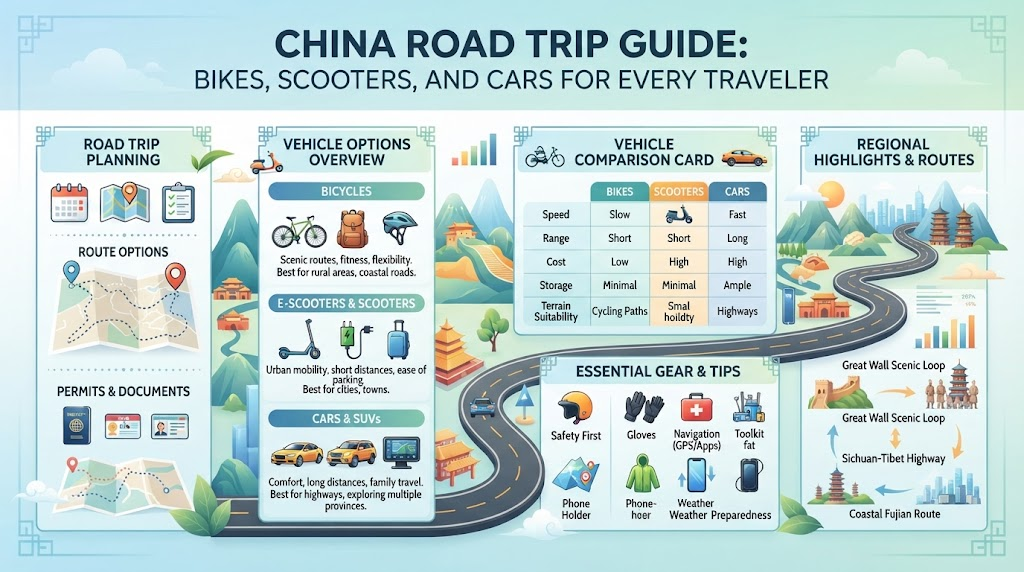
China stretches across deserts, mountains, megacities, and coastlines. Every region feels like a different country. The road network connects all of it. Riding or driving through China gives you a front-row seat to this amazing variety. You set your own pace and choose your own stops. MotoShare.com.cn helps travelers find trusted local rental providers across China. This guide covers everything you need to know before you hit the road.
What Makes China a Dream Destination for Riders?
Few countries offer such dramatic variety in a single trip. You can start in tropical Yunnan and end on the Tibetan plateau. You can ride past rice terraces, tea plantations, and ancient trading towns. The roads themselves range from spotless expressways to winding mountain tracks.
China also has a massive riding culture. Millions of scooters and motorcycles fill city streets every day. Local riders know every shortcut and scenic detour. Rental providers in each region understand their terrain deeply. This local knowledge helps visitors ride smarter and safer.
But China also has strict rules. Licensing, insurance, and road access all follow national and local laws. Understanding these rules before you arrive saves time, money, and stress. That is exactly what this guide helps you do.
Matching Your Machine to Your Mission
Your trip style decides your vehicle. Ask yourself three simple questions first. How far do you plan to ride each day? How much luggage will you carry? Will you travel alone or with a passenger?
City travelers need light, easy machines. Long-distance riders need comfort and fuel range. Families and groups often need four wheels instead of two. Honest answers here prevent expensive mistakes later.
Also think about the terrain you will face. Flat coastal highways are easy on any bike. High mountain passes demand power and good brakes. Gravel roads in western China punish bikes with low ground clearance. Pick a vehicle that matches the hardest road on your route, not the easiest.
Picking the Right Vehicle: A Full Breakdown
Every vehicle type serves a different purpose in China. Here is how the main options compare for real trips.
| Vehicle Type | Best Use | Rider Skill Needed | Luggage Space | Road Comfort |
|---|---|---|---|---|
| City Scooter / E-Bike | Short city hops, neighborhood trips | Beginner | Very limited | Basic |
| Commuter Motorcycle | Daily commuting, light weekend touring | Intermediate | Small bags only | Decent |
| Adventure Touring Bike | Long highway days plus mountain passes | Advanced | Full panniers and top box | Excellent |
| Rental Car / SUV | Families, bad weather, multi-city trips | Licensed driver | Large trunk and cabin | Best |
Luggage space often decides the trip. A scooter carries almost nothing beyond a backpack. An adventure bike hauls weeks of gear in panniers. An SUV swallows suitcases for four people without trouble. Passenger comfort also matters. Small bikes tire passengers quickly on rough roads. Cars keep everyone fresh after long days.
Fuel range is the final factor. Electric scooters need charging every 60 to 100 kilometers. Adventure bikes cover 300 to 400 kilometers per tank. Plan your daily route around these real numbers. Remote areas in western China have long gaps between fuel stations.
Motorcycle Rental Beijing and Motorcycle Rental Shanghai
These two cities offer completely different riding worlds. Beijing spreads outward toward mountains and the Great Wall. Shanghai hugs a river delta packed with neighboring cities.
In Beijing, the best riding starts outside the central Ring Roads. Districts like Yanqing and Miyun offer quiet mountain roads and stunning views. But motorcycles face access limits inside central Beijing. Check current zone rules before planning any route through the city core. Many riders base themselves in outer districts instead.
Shanghai has its own maze of plate restrictions. The inner city limits motorcycle access in many central areas. The Pudong riverfront allows limited riding. Once you leave the core, the delta region opens up beautifully. Highways toward Suzhou, Hangzhou, and the water towns offer smooth pavement and lovely scenery.
For motorcycle rental Beijing or motorcycle rental Shanghai, always confirm which zones your rental covers. Ask the provider directly about plate rules and legal riding areas. MotoShare lists operators who know these city-specific restrictions well. They help you avoid fines and confusing detours on day one.
Scooter Rental China and Getting Around Cities
Scooters rule Chinese cities for simple reasons. They slip through traffic jams. They park almost anywhere. They cost very little to rent and charge.
Electric scooters suit short trips inside one district. You can cover five to ten kilometers without effort. Charging points appear at convenience stores, malls, and residential compounds. But battery range limits longer journeys. Plan your route around charging stops if you ride electric.
Parking rules vary between cities. Designated scooter parking exists near subway stations and shopping areas. Pedestrian zones ban all vehicles completely. Riding on sidewalks causes trouble with pedestrians and police. Stay on roads and marked lanes at all times.
For bike rental China and scooter rental China, lighter options cover different needs. A 125cc scooter handles longer city trips with more comfort. A small commuter motorcycle covers even more ground. Both work well for exploring neighborhoods and nearby suburbs. Just avoid expressways and elevated roads where two-wheelers are banned.
Adventure Motorcycle Rental China for Wild Routes
Adventure motorcycles look and feel different from standard bikes. They sit taller with upright handlebars. Their long-travel suspension absorbs rough pavement and gravel. Dual-sport tires grip both asphalt and dirt. You sit comfortably for hours in the saddle. These machines exist for exactly what their name promises.
Western Sichuan ranks among China’s finest adventure riding regions. Routes from Chengdu toward Kangding climb into dramatic mountain country. The road toward Shangri-La in Yunnan winds through deep valleys and high passes. Gansu offers remote desert tracks along the old Silk Road. Elevation often climbs above 4,000 meters on these routes.
High altitude changes everything about riding. Your engine loses power in thin air. You tire faster than at sea level. Weather flips from sunshine to snowfall within an hour. Pack cold-weather gear even in summer months.
For adventure motorcycle rental China, choose a bike with proven reliability and service support. The CFMOTO 650MT and Benelli TRK models appear often in rental fleets across western regions. These bikes handle Chinese roads and fuel quality well. MotoShare connects you with providers who maintain their adventure fleets properly.
Pre-Ride Checks: Ten Minutes That Save Your Trip
Never skip the handover inspection. Ten careful minutes prevent hours of roadside trouble. Rental providers should walk through the vehicle with you. Never accept a rushed handover.
| Check Point | What to Look For | Why It Matters |
|---|---|---|
| Tires & Tread Depth | Cracks, bald patches, correct pressure | Blowouts at speed cause serious crashes |
| Front & Rear Brakes | Firm lever feel, enough pad thickness | Brake failure on descents is deadly |
| Headlight & Indicators | Every light works when switched on | Visibility and signaling prevent accidents |
| Chain & Fluid Levels | Proper tension, enough oil and coolant | Snapped chains and overheating strand you |
| Registration & Insurance Card | Current documents stored on the bike | Police checks require valid paperwork |
| Mirrors & Throttle Cable | Secure mirrors, smooth throttle return | Loose mirrors and sticky throttles impair control |
Photograph every existing scratch, dent, and worn part before riding away. Date-stamp the photos if your phone allows it. This protects you from unfair damage charges at return. Ask the provider to sign a condition report noting existing damage. Keep a copy on your phone. MotoShare encourages transparent handovers between riders and local providers.
Planning a Motorcycle Road Trip China Will Remember
A great motorcycle road trip China plan starts with honest daily distances. Mountain corridors punish overconfidence. Keep daily riding under 200 to 250 kilometers in steep terrain. Highway days can stretch to 400 kilometers if you stay focused. But fatigue kills on unfamiliar roads.
Highway toll booths generally let motorcycles through the same lanes as cars. You pay the same rate as a small vehicle. Keep cash or a digital payment method ready. Some remote toll stations lack electronic payment terminals.
Seasonal weather shapes every route choice. Summer monsoons drench southern China from June through August. Winter freezes high passes in Tibet and Qinghai. Spring and autumn offer the best riding conditions across most regions. Daylight hours matter too. Start early and stop before dark. Rural roads lack lighting, and animals wander onto pavement at dusk.
Fuel stations appear often on major highways. Remote stretches in western China may go 100 kilometers between stations. Fill your tank whenever you see a station in these areas. Carry a small fuel reserve if your route enters very remote territory.
Car Rental China for Foreigners and Self Drive Options
Sometimes four wheels beat two. Families with children need space and safety. Heavy rain turns motorcycle travel miserable and risky. Multi-city group trips require luggage capacity no bike can match. Winter travel in northern China demands heated transport.
The legal requirements differ from motorcycle rentals in important ways. China does not accept the International Driving Permit (IDP) for any vehicle. The IDP has no legal standing on Chinese roads. Foreign travelers must obtain a Chinese Temporary Driving Permit (临时驾驶许可) before renting any vehicle.
This temporary permit allows driving rental cars in the C1 or C2 category. C1 covers manual transmission small cars. C2 covers automatic transmission vehicles. The permit stays valid for three months on short stays. Longer stays can extend it up to one year.
The application needs specific documents. Bring your passport with valid visa, your home driver’s license, and a certified Chinese translation of that license. Two one-inch white-background photos complete the packet. Visit a Vehicle Management Office (车辆管理所) or traffic police service hall. After a short road safety session, the office issues your permit on the spot.
For car rental China for foreigners, many major airports now offer on-site permit services. Check with your arrival airport before flying. This saves a separate trip into the city. For self drive car rental China, MotoShare helps you find providers experienced with foreign customers and their paperwork needs.
Why Book Through MotoShare
MotoShare.com.cn works as a vehicle discovery marketplace for China travel. We connect riders and drivers with verified local rental providers nationwide. Our platform removes the guesswork from finding trustworthy operators.
Search by city and travel dates to see available vehicles. Compare transparent prices listed in RMB with no hidden platform fees. Browse bike brands including CFMOTO, Benelli, and other popular models in Chinese rental fleets. Read provider details and vehicle specifications before you book.
The verification process protects you. We check that providers maintain proper insurance and registration. We confirm they understand document requirements for foreign customers. This matters especially for temporary driving permit procedures.
MotoShare does not own the vehicles. We connect you directly with local operators who know their regions. A Shanghai scooter provider understands city plate zones. A Yunnan adventure bike operator knows mountain weather patterns. This local knowledge makes your trip safer and smoother.
Real Trips, Real Riders
The Shanghai Expat Commuter
An expat professional in Shanghai needs reliable daily transport. They book a 125cc commuter motorcycle through MotoShare. It handles the daily commute and weekend exploring. The provider delivers the bike with proper registration and insurance. Parking stays easy and fuel costs stay low.
The Yunnan Adventure Rider
An experienced rider books an adventure motorcycle to explore Shangri-La’s mountain roads. The CFMOTO 650MT handles gravel sections and high passes well. They ride five days from Lijiang toward the Tibetan border. Daily distances stay under 200 kilometers to account for altitude and weather.
The Beijing Business Traveler
A foreign business traveler lands in Beijing for a two-week project. They obtain a temporary driving permit at the airport. An electric car rental covers meetings across the city. The vehicle handles Ring Road restrictions with proper local plates. No parking hassles and no fuel costs.
The Silk Road Duo
Two friends fly into Lanzhou for a Silk Road road trip. They book a mid-size SUV through MotoShare. The vehicle carries their luggage for ten days of driving. They explore historic sections of the route through Gansu. The SUV handles rough roads and blocks desert winds.
Mistakes That Ruin China Rental Trips
Assuming an IDP works on mainland roads. China does not recognize any International Driving Permit. You need a Chinese Temporary Driving Permit or a full Chinese license. Apply before you arrive or right after landing.
Riding on restricted elevated highways. Many Chinese cities ban motorcycles from elevated roads and expressways. Check local bylaws before entering these roads. Fines and vehicle confiscation wreck trip plans fast.
Skipping the certified Chinese translation. Your home driver’s license needs an official Chinese translation. Translation agencies and some vehicle management offices provide this. Without it, your permit application fails.
Neglecting the pre-ride inspection. Every scratch you miss becomes your responsibility at return. Walk around the vehicle carefully with the provider. Photograph everything and keep the evidence.
Forgetting local payment methods. Highway tolls and remote fuel stops may not accept foreign cards. Set up Alipay or WeChat Pay with a linked card. Carry some RMB cash as backup.
Ignoring high-altitude weather swings. Western mountain regions shift from sun to snow quickly. Pack layers and rain gear in every season. Hypothermia and poor visibility cause accidents.
Riding without offline navigation. Remote valleys often lack cell signal. Download offline maps before entering these areas. One wrong turn in the mountains wastes hours of daylight.
Renting too much bike for your skills. A heavy adventure bike punishes inexperience on gravel. Start lighter if you lack off-road time. Confidence on a small bike beats fear on a big one.
Your Simple Booking Checklist
- Valid passport with entry visa and stamp. Your passport must stay valid through the whole rental.
- Chinese Temporary Driving Permit or full Chinese Driver’s License. This legal document is non-negotiable for any vehicle.
- Accepted payment method or credit card for the deposit. Providers usually hold a deposit during the rental.
- Certified Chinese translation of your home license. Required for the temporary permit application.
- DOT or CCC certified helmet and riding gear. Chinese law requires helmets for all motorcycle riders.
- Fuel and battery return agreement. Most rentals use a full-to-full policy for fuel or charge.
Frequently Asked Questions
1. Can foreigners rent a car or motorcycle in China with an International Driving Permit (IDP)?
No. China does not recognize the International Driving Permit for any vehicle type. The IDP has no legal standing on Chinese roads. You must obtain a Chinese Temporary Driving Permit or a full Chinese license. Rental providers will reject an IDP at pickup.
2. How does a foreign visitor get a Chinese Temporary Driving Permit?
Visit a Vehicle Management Office or traffic police service hall with your passport, home license, certified Chinese translation, and two white-background photos. You watch a short road safety video and receive the permit the same day. Some airports offer this service for arriving passengers.
3. Are motorcycle helmets required by law across China?
Yes. Chinese law requires all motorcycle riders and passengers to wear approved helmets. This applies nationwide on all public roads. Rental providers usually include a helmet with the vehicle. Check that it fits properly before riding.
4. Are motorcycles allowed on Chinese highways and expressways?
Rules vary by province and road type. Many expressways ban motorcycles entirely. Some provincial highways allow them with restrictions. Always check local regulations before planning routes on major highways. City elevated roads almost always prohibit two-wheelers.
5. What is the mandatory vehicle insurance policy in China?
Compulsory Traffic Accident Liability Insurance (交强险) is required for all registered vehicles in China. This basic coverage pays for third-party injury and property damage. Rental vehicles must carry this insurance by law. Ask your provider for proof of coverage.
6. Can tourists rent lightweight electric scooters without a driver’s license?
Some short-term e-bike rentals operate without a license requirement. These usually limit speed and range for neighborhood use. Faster electric scooters and all motorcycles require proper licensing. Check with the provider about local rules for the specific vehicle.
7. What documents are needed to pick up a rental car in China?
Bring your passport, valid Chinese driving license or temporary permit, and the certified translation of your home license. A credit card for the security deposit is also needed. Some providers require identity verification one working day before pickup.
8. Which motorcycle models, like CFMOTO, are most popular for road trips in China?
CFMOTO builds popular adventure and touring models for Chinese roads. The 650MT and 800MT handle long-distance travel well. Benelli TRK series bikes also appear in rental fleets. These models balance power, reliability, and service availability across regions.
9. How do security deposits work for vehicle rentals in China?
Providers hold a deposit on your credit card during the rental period. The amount varies by vehicle value and rental length. The hold releases after return if no damage occurs. Cash deposits may work at some local providers.
10. Can I rent a car or motorcycle in Beijing and drop it off in another city?
One-way rentals exist but require advance arrangements. Fees for one-way drops vary by distance and provider. Not all operators offer this service. Confirm drop-off details before booking to avoid surprises.
11. What should riders do if they experience a breakdown or flat tire in rural China?
Call your rental provider first for assistance instructions. Many providers offer roadside support within their service area. In remote regions, local mechanics can handle basic repairs. Carry a phone with a Chinese SIM card for reliable coverage.
12. Why should travelers use a marketplace like MotoShare to discover local rentals?
MotoShare connects you with verified providers who understand foreign customer needs. Transparent pricing in RMB eliminates hidden fees. Local operators know their region’s rules and conditions. This combination saves time and reduces risk.
Final Thoughts Before You Ride
Your vehicle choice depends on your route, skill level, and the season. Scooters suit city exploring. Adventure bikes conquer mountain passes. Cars carry families and luggage through any weather. Sort your licensing before you arrive. Respect local road rules in every province. China rewards road travelers with landscapes that stay with you forever. Take the journey, ride safely, and drive legally. The open road is waiting.
Leave a Reply