Finding the Best Cancer Hospitals: Key Factors for Patients and Families
Introduction
A cancer diagnosis brings immense emotional and physical challenges for patients and their families. In the middle of uncertainty, making informed decisions about medical care can feel overwhelming. Finding clear, reliable information is one of the most critical first steps in navigating this journey. Selecting where to receive treatment is a pivotal choice that directly influences your care experience, access to advanced therapies, and overall well-being. Dedicated healthcare research platforms help patients and caregivers research specialized oncology centers, treatment pathways, and global healthcare destinations to make well-informed decisions. This comprehensive guide explores how to evaluate the best cancer hospitals, understand modern oncology treatments, assess doctor qualifications, manage treatment costs, and organize care whether staying local or traveling abroad.
2. Understanding the Best Cancer Hospitals
When people search for the best cancer hospitals, they are typically looking for healthcare centers that offer advanced medical technology, experienced oncology teams, and high-quality supportive care. Cancer is a complex group of diseases, meaning that the ideal medical facility depends entirely on a patient’s specific diagnosis, stage, and personal health needs.
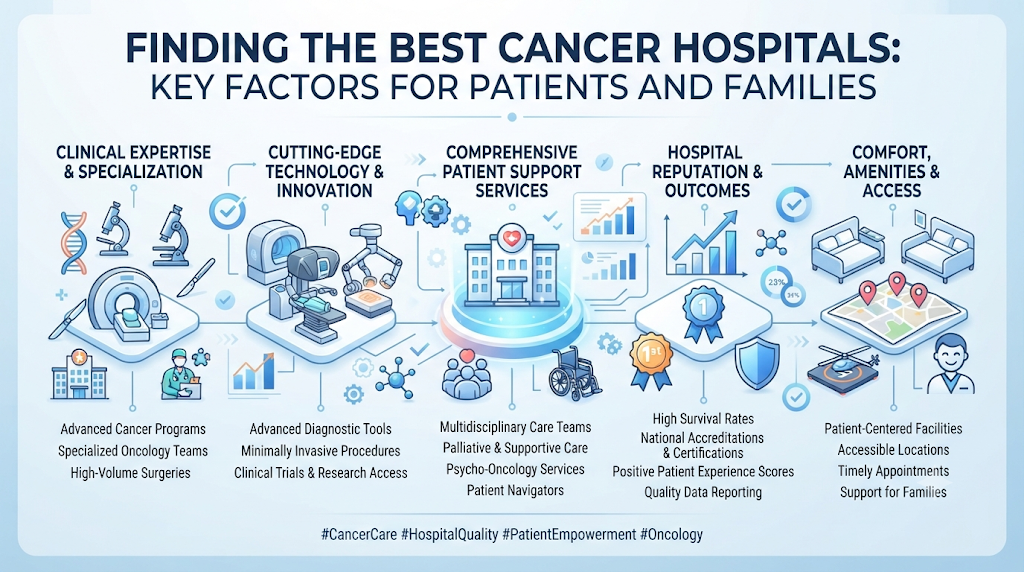
Several key factors define high-quality cancer hospitals:
- Comprehensive diagnostic infrastructure, including high-resolution imaging and molecular pathology laboratories.
- Multidisciplinary teams that meet regularly to coordinate individualized treatment strategies.
- Access to evidence-based therapies, clinical trials, and innovative surgical interventions.
- Holistic support services, such as nutrition planning, pain management, and psychological counseling.
Because every patient’s medical profile is distinct, a facility that is well-suited for one type of oncology care may not necessarily be the best fit for another. Selecting a treatment center requires matching the hospital’s specific clinical strengths to your individual diagnosis.
3. Types of Cancer Treatment Hospitals and Oncology Centers
Understanding the different categories of healthcare facilities helps narrow down your search based on the level of care required:
- Comprehensive Cancer Centers: These institutions focus exclusively on oncology care, laboratory research, and clinical trials. They typically handle rare, complex, or advanced cancers requiring specialized protocols.
- Specialized Oncology Hospitals: Dedicated cancer hospitals that concentrate their resources, staff, and technology entirely on cancer diagnosis, surgery, radiation, and systemic therapies.
- Multispecialty Hospitals with Oncology Departments: Large general hospitals equipped with full-service cancer wings. They offer the advantage of readily available non-oncology specialists (such as cardiologists and nephrologists) to manage pre-existing conditions during treatment.
- Academic and Research Medical Centers: University-affiliated hospitals where clinical care is closely integrated with ongoing medical research, giving patients potential access to emerging therapies.
- International Cancer Treatment Centers: Globally accredited hospitals designed to support medical travelers with specialized international patient departments, translation services, and coordinated care pathways.
4. Cancer Treatments Available at Major Hospitals
Leading cancer treatment hospitals offer a wide spectrum of therapeutic modalities. Treatment decisions are guided by tumor pathology, staging, overall health, and collaborative medical evaluations.
- Oncology Surgery: Surgical interventions aim to remove solid tumors and surrounding affected tissue, obtain biopsy samples, or provide symptom relief.
- Systemic Chemotherapy: The use of pharmacological agents to target and destroy rapidly dividing cancer cells throughout the body.
- Radiation Therapy: Advanced radiation techniques—such as Intensity-Modulated Radiation Therapy (IMRT), Stereotactic Body Radiotherapy (SBRT), and Proton Therapy—deliver precise radiation doses directly to tumors while sparing adjacent healthy tissues.
- Immunotherapy: Innovative treatments that stimulate or train the body’s own immune system to identify and eliminate cancer cells.
- Targeted Therapy: Precision medications designed to block specific genetic mutations, proteins, or molecular pathways that fuel cancer growth.
- Hormone Therapy: Treatments that slow or stop the growth of hormone-sensitive cancers, such as certain breast and prostate cancers.
- Supportive and Palliative Care: Specialized medical care focused on relieving symptoms, reducing pain, managing treatment side effects, and improving quality of life at any stage of illness.
5. How to Choose the Right Cancer Hospital
Selecting the most appropriate facility requires evaluating clinical expertise, technology, and patient support systems.
Medical Expertise and Specialization
Ensure the hospital has extensive experience in treating your exact type and sub-type of cancer. Sub-specialized oncologists who focus primarily on specific organ systems or tumor types often have deeper insights into standard and emerging treatment protocols.
Diagnostic and Treatment Facilities
Accurate staging and monitoring rely heavily on high-end diagnostics, such as PET-CT, specialized MRI, and next-generation genetic sequencing. Verify that the center houses modern operating suites, dedicated oncology intensive care units (ICUs), and advanced radiation delivery systems.
Multidisciplinary Cancer Care
Effective cancer management relies on multidisciplinary tumor boards. In these meetings, medical oncologists, surgical oncologists, radiation oncologists, pathologists, and radiologists collectively review patient cases to design coordinated, cohesive treatment plans.
Hospital Accreditation and Quality Standards
Review independent national and international accreditations (such as JCI or national healthcare quality boards). Accreditations ensure that a hospital maintains rigorous standards for patient safety, sterile environments, infection prevention, and nursing care.
Treatment Cost and Financial Planning
Cancer care involves multiple expenses, including specialist consultations, diagnostic imaging, pathology, hospital stays, surgical fees, medications, and long-term follow-up visits. Request a transparent, itemized written estimate beforehand and clarify insurance coverage or payment terms.
6. Finding the Best Cancer Doctors
The expertise and communication style of your treating medical team play a critical role in your treatment journey. When researching oncology specialists, consider the following points:
- Board Certification and Sub-specialization: Look for doctors certified in medical oncology, surgical oncology, or radiation oncology with focused expertise in your specific condition.
- Clinical Experience and Case Volume: Specialists who routinely manage high volumes of similar cancer cases are often well-equipped to handle nuanced decisions and potential complications.
- Hospital Affiliations: Top specialists generally practice at well-equipped hospitals that offer the diagnostic and therapeutic infrastructure required for comprehensive care.
- Clear Communication: Choose a physician who explains diagnostic findings clearly, outlines the benefits and risks of all available options, and listens to your concerns.
- Openness to Second Opinions: Reputable oncologists actively support second opinions and collaborate productively with other specialists.
7. Cancer Treatment Abroad and International Patients
Traveling internationally for cancer treatment is an option pursued by many seeking specialized therapies, clinical trials, or care within specific budget frameworks.
Key considerations for international cancer care include:
- Medical Record Coordination: Secure and translate all relevant biopsy slides, digital imaging files, surgical summaries, and pathology reports before traveling.
- International Patient Services: Top global hospitals offer dedicated desks to assist with medical visas, language interpretation, airport transfers, local accommodation, and scheduling.
- Cost Verification: Confirm what is covered in upfront cost estimates, and plan a financial buffer for unexpected complications or additional diagnostic tests.
- Travel Safety and Fitness: Consult with your primary physician to confirm that traveling long distances is safe given your current health status.
- Post-Treatment Continuity: Ensure a clear post-treatment discharge plan is in place, including protocols for communicating with your local doctors once you return home.
8. Comparing Cancer Hospitals Before Making a Decision
Use this structured framework to compare different oncology centers during your research:
| Evaluation Factor | What Patients and Families Should Review |
| Cancer Specialization | Hospital experience and volume with your specific cancer type. |
| Medical Team | Availability of specialized oncologists and active multidisciplinary tumor boards. |
| Diagnostics | On-site access to PET-CT, molecular pathology, and genetic testing. |
| Treatment Modalities | Availability of advanced surgical options, modern radiation units, and targeted therapies. |
| Quality Accreditations | Recognized national and international hospital accreditations and safety ratings. |
| Cost Transparency | Clear, itemized estimates for diagnostics, hospital stays, and therapies. |
| Location & Logistics | Travel distance, accessibility, family lodging, and transport convenience. |
| Follow-Up Support | Availability of remote consultations and coordinated post-discharge care. |
9. Importance of a Cancer Treatment Second Opinion
Seeking a second opinion is a standard, widely accepted medical practice in cancer care. It provides reassurance and ensures that your diagnosis is accurate and your treatment plan is optimal.
- Confirming Diagnosis and Staging: Pathologists and radiologists can re-evaluate biopsy tissue samples and imaging scans to confirm the exact cell type and stage.
- Exploring Alternative Approaches: Another specialist may propose a different surgical technique, suggest targeted therapies, or identify an active clinical trial.
- Making Informed Choices: A second opinion offers greater clarity, helping you move forward into treatment with confidence.
- Avoiding Unnecessary Delays: While a second opinion is valuable, it should be organized efficiently so that urgent, time-sensitive medical care is not delayed.
10. Common Mistakes Patients Should Avoid
Navigating cancer care is complex. Avoiding these common pitfalls can help protect your health, time, and financial resources:
- Relying Solely on Generic Rankings: Generalized hospital lists do not always reflect deep expertise in your specific cancer type or stage.
- Focusing Only on Treatment Price: Lower upfront costs should never compromise clinical safety, diagnostic precision, or the quality of medications.
- Overlooking Multidisciplinary Care: Choosing a hospital without regular collaboration between surgical, medical, and radiation specialists can lead to fragmented care.
- Traveling Without Medical Clearance: Traveling long distances without consulting your physician or organizing digital medical records can lead to complications.
- Relying on Anecdotal Testimonials: Online reviews reflect individual experiences but cannot substitute for verified medical expertise and clinical data.
- Ignoring Post-Treatment Care: Cancer care extends beyond initial therapy; long-term follow-up, rehabilitation, and monitoring must be planned early.
Frequently Asked Questions
1. What makes a cancer hospital suitable for my specific diagnosis?
A suitable hospital has dedicated experience in treating your exact cancer type, access to multidisciplinary tumor boards, advanced diagnostic tools, and comprehensive supportive care.
2. How do I know if I need to travel to one of the best cancer hospitals for treatment?
Traveling may be beneficial if local centers lack specialized surgical expertise, advanced radiation technology, clinical trials, or specific targeted therapies required for your condition.
3. Is it safe to seek a second opinion after receiving a cancer diagnosis?
Yes. Seeking a second opinion is standard medical practice and helps verify the accuracy of the diagnosis, staging, and proposed treatment strategy.
4. What documents should I prepare before consulting an oncology hospital?
Collect all pathology reports, original biopsy slides or blocks, recent digital imaging files (CT, MRI, PET scans), blood test results, and a summary of your medical history.
5. What is the role of a multidisciplinary tumor board?
A multidisciplinary tumor board brings together surgical, medical, and radiation oncologists along with pathologists and radiologists to collectively design a personalized treatment plan.
6. How do cancer treatment costs vary between hospitals?
Costs vary based on hospital infrastructure, required surgical techniques, medication types (such as novel immunotherapies), duration of hospital stay, and geographic location.
7. Can international patients receive coordinated care at global oncology centers?
Yes. Many international hospitals feature dedicated global patient departments that manage appointments, interpretation, medical visa documentation, and local logistics.
8. What is the difference between chemotherapy, immunotherapy, and targeted therapy?
Chemotherapy destroys rapidly dividing cells throughout the body, targeted therapy attacks specific molecular alterations in cancer cells, and immunotherapy helps the body’s immune system recognize and fight cancer.
9. How important is hospital accreditation when choosing cancer care?
Accreditations from recognized independent bodies confirm that a hospital complies with rigorous international standards for clinical safety, infection control, and quality care.
10. What should I look for regarding post-treatment care?
Check whether the hospital provides clear discharge instructions, direct coordination with your local doctors, rehabilitation services, and telemedicine options for regular follow-up monitoring.
Conclusion
Navigating cancer care requires careful research, clear communication, and informed decision-making. Finding the best cancer hospitals involves matching your unique medical needs with experienced specialists, advanced diagnostic and treatment technology, and strong multidisciplinary support systems. Taking the time to compare hospital capabilities, verify doctor credentials, review complete treatment estimates, and obtain a second opinion helps ensure you receive safe, high-quality care. Always consult directly with qualified healthcare professionals to discuss your diagnosis and evaluate all available treatment options for your individual situation.
Leave a Reply