Your Complete Guide to Colonoscopy Procedure, Stomach Care, and Surgery
Introduction
Do you often feel pain in your belly? Does bloating or gas spoil your day? If yes, you are not alone. Millions of people face tummy trouble each day. It can make you feel tired and sad. It can also worry your family. But do not lose hope. The right care can change your life. This blog is your friendly guide. It covers gut doctors, common illnesses, and proven treatments. You will also learn about helpful tests and safe surgeries. We will show you how to pick a good hospital with ease. GastroHospitals.com is here to help you too. It links you to trusted care centers. Let us begin this helpful journey step by step.
Getting to Know the Gut Doctor
Your body has a long tube for food. It starts at your mouth and ends at your bottom. It includes your stomach, guts, liver, and more. A gastroenterologist is the doctor for this tube. This expert treats many tummy problems. They help with acid that burns your chest. They also treat bugs that cause loose stool. Long-term gut illness is part of their work too. People visit them for different reasons. Maybe your belly aches for weeks. Maybe you spot blood in your stool. Maybe food gets stuck when you swallow. Your family doctor can send you to one. These experts study for many years. They are skilled at finding the real cause of your pain.
Why You Should Not Ignore Gut Trouble
Many people think tummy pain will just go away. Sometimes it does. But often, it gets worse. Digestive disorders can slowly harm your body. Acid that rises at night can hurt your food pipe. A simple bug can drain your body of water. Long-term swelling in the gut can cause damage. A sick liver can affect your whole body. Here is the good news. Catching problems early helps a lot. You can stop small issues from turning big. You can also feel better much faster. So, listen to your body. If something feels off, do not wait. Get help before it gets hard to fix.
How GastroHospitals.com Becomes Your Helper
Looking for a good hospital can feel scary. You may not know where to start. GastroHospitals.com makes this job simple. It is a helpful list of gut care centers. You can search for care close to your home. The site shows 50 top hospitals in one spot. These places treat many gut issues. You can find help for stomach and liver problems. You can also find care for pancreas and IBD. Endoscopy services are listed as well. This saves you hours of phone calls. You can see all your choices at once. Then you can pick the best one for you.
Red Flags That Mean “See a Doctor Now”
Some tummy issues are small. But some signs are serious. Here are the warnings you must not ignore. First, watch for pain that stays for many days. Second, check if heartburn hits you every night. Third, notice if food feels stuck in your throat. Fourth, look for blood when you go to the toilet. Fifth, track weight loss with no clear reason. These signs mean your body needs help. You should also know when to rush to the emergency room. Go at once if your pain is very strong. Go if your belly feels hard like a board. Go if you throw up blood. Go if your stool looks black and sticky. These are danger signs. Do not wait even a minute.
Tummy Problems You Should Know About
Many health issues can upset your gut. Let us meet some common ones. GERD means acid flows up your food pipe. Infections bring pain and loose stool. IBD is a set of long-term gut illnesses. Liver problems can also make you feel weak. Each problem shows its own signs. Many people feel scared after a diagnosis. But finding the issue early is the key. Early care stops small problems from growing. It also helps you feel good again. So, do not hide your symptoms. Talk to a doctor without delay.
Table 1: Digestive Symptoms and Possible Medical Steps
| Symptom | What It May Need | Possible Next Step |
|---|---|---|
| Daily heartburn | GERD treatment | See a gastroenterologist for a check-up |
| Loose stool for days | gastroenteritis treatment | Drink fluids and call your doctor |
| Blood in stool | A test to check your colon | Ask about a colonoscopy procedure |
| Ongoing belly pain | A check for IBD treatment | Talk to a gut doctor about your pain |
| Yellow skin or eyes | liver disease treatment | See a liver specialist right away |
Gastroenteritis Treatment: Beating the Stomach Bug
Gastroenteritis is the real name for the stomach flu. It is not the same as the normal flu. It is a germ that upsets your stomach and gut. Bad food or dirty water can carry it. It can also spread from one person to another. The main signs are loose stool and throwing up. Your belly may cramp and hurt. You may run a fever and feel weak. The biggest danger is losing too much water. This is called dehydration. So, the first step in gastroenteritis treatment is to drink fluids. Oral rehydration salts work very well. They help your body keep water. Eat light food when you feel ready. Try bananas, rice, applesauce, and toast. These are gentle on your tummy. Rest as much as you can. Most people feel better in a few days. But call a doctor if you cannot drink anything.
GERD Treatment: Saying Goodbye to Heartburn
GERD is short for gastroesophageal reflux disease. It happens when stomach acid climbs back up. It rises into your food pipe. This causes a hot, burning feel in your chest. Most people call it heartburn. It can also leave a sour taste in your mouth. Many things can start this problem. Heavy meals can do it. Lying down right after eating can do it. Some foods can trigger it too. Spicy food, chocolate, and coffee are common culprits. The first step in GERD treatment is to fix daily habits. Eat smaller meals more often. Stay upright for three hours after you eat. Lift the head of your bed. Find the foods that spark your heartburn. Your doctor may also give you medicine. These pills lower the acid in your stomach. Surgery is rare. It is only for cases that do not improve.
IBD Treatment: Living Well with a Long-Term Illness
IBD stands for inflammatory bowel disease. It is a group of lasting gut problems. Crohn’s disease and ulcerative colitis are the two main types. These illnesses cause swelling inside your gut. This leads to pain, loose stool, and tiredness. Doctors do not know the exact cause. But it can run in families. IBD is not the same as IBS. IBS is common and does not damage your gut. IBD is more serious. IBD treatment works to calm the swelling. This helps you feel better and protects your gut. Your doctor may give you special medicine. You may also need to change what you eat. Some people need surgery if other steps fail. Tracking your symptoms each day helps a lot. It guides your doctor to the best plan for you.
Liver Disease Treatment: Protecting a Quiet Hero
Your liver works hard every day. It cleans your blood and stores energy. It also helps you digest your food. Many things can harm this quiet hero. Too much alcohol can damage it. Some viruses can attack it. Hepatitis B and C are common ones. Carrying too much weight can hurt it too. Liver disease treatment depends on the cause. If alcohol is the problem, you must stop drinking. If a virus is the cause, you may need medicine. Eating well and losing weight can help if fat is the issue. Your doctor will check your liver with regular tests. They may send you to a liver expert. This doctor is called a hepatologist. Caring for your liver keeps your whole body strong.
Colonoscopy Procedure: A Small Test with Big Value
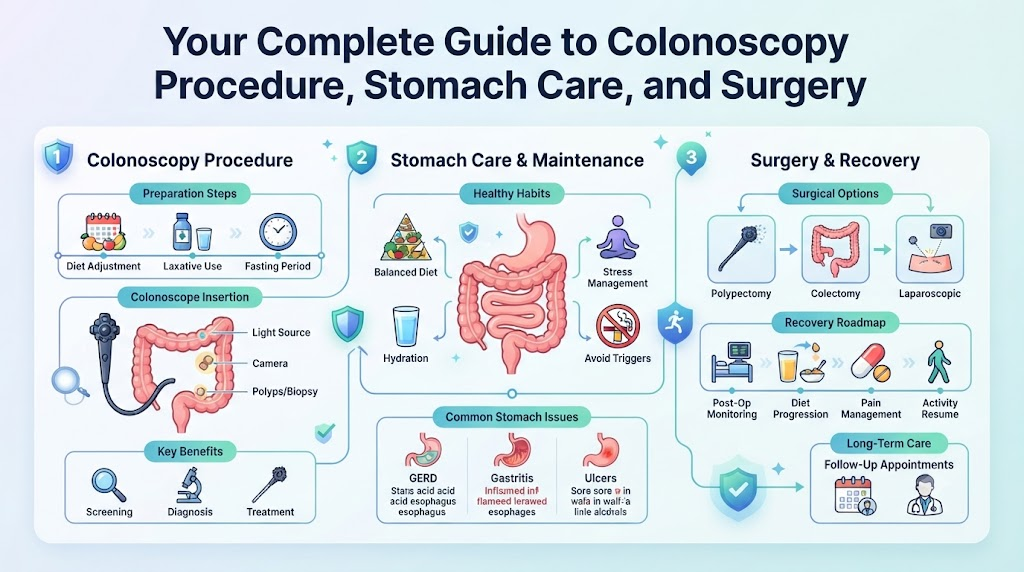
A colonoscopy procedure is a simple test. It lets your doctor see inside your colon. Your colon is also called the large intestine. This test finds problems like polyps and cancer. Many people feel nervous about this test. But it is very safe and very common. Your doctor gives you a special drink. This drink clears out your colon. It is called the prep. You take it the day before. On test day, you get sleep medicine. This helps you relax with no pain. The doctor uses a thin, soft tube with a camera. They guide it gently through your colon. They watch the inside on a screen. The test takes about half an hour. You wake up soon after. You may feel sleepy for a while. Then you can go home. Most people feel fine the next day.
Gastrointestinal Surgery: When It Becomes Necessary
Sometimes, medicine and habit changes are not enough. You may need an operation. This is called gastrointestinal surgery. There are many reasons for this type of surgery. You may need your gallbladder taken out. You may need a hernia repaired. You may also need a part of your bowel fixed. In the past, surgery meant big cuts. This led to long hospital stays and slow healing. But things are much better today. Doctors now use tiny cuts and small tools. This method is called laparoscopic surgery. They use a small camera to see inside. This means less pain for you. You heal faster and have small scars. You can often go home the same day. Ask your doctor if this is an option for you.
How to Compare Gastroenterology Hospitals
Picking a hospital is a big step. You want the best hospitals for gastroenterology. But how do you compare them? Here are key things to check. First, look at the doctors. Where did they train? How long have they worked? Second, check their tools. Do they have modern endoscopy suites? This means they use the newest cameras for tests. Third, look for 24/7 emergency care. This matters if a sudden problem hits. Fourth, check if they take your insurance. This can save you a lot of money. Finally, see how clean the hospital is. A clean place is a safe place. You can also read what other patients say. This gives you a real feel for their care. Use these tips to choose the right place.
Table 2: What to Check When Choosing a Gastroenterology Hospital
| Factor | Why It Matters | What to Check |
|---|---|---|
| Doctor’s experience | You want a skilled doctor for your care | Look for board certifications and years of work |
| Modern tools | Better tools mean safer tests and gastrointestinal surgery | Ask about their endoscopy and surgery equipment |
| Emergency care | Sudden gut pain needs fast help | Check if they have a 24/7 emergency room |
| Insurance | You want care that fits your budget | Ask if they accept your health plan |
| Cleanliness | A clean hospital stops the spread of germs | Look at patient reviews and hospital ratings |
Real Stories That Give You Hope
It helps to hear how others solved their gut problems. Here are a few simple tales.
- A man had heartburn every night. He thought it was normal. He ate dinner earlier. He stopped late-night snacks. He raised his bed too. His sleep became much better. He did not need strong pills.
- A woman went for a routine check. Her doctor found a tiny polyp. They removed it during a colonoscopy procedure. It was not cancer. But it could have turned into cancer. Finding it early saved her from big trouble.
- A young man felt a sharp pain in his belly. It got worse very fast. His family rushed him to the emergency room. Doctors found a problem with his gallbladder. They did quick surgery. He felt better in a few days.
- A woman had loose stool for many weeks. She felt weak and tired. Her doctor ran some tests. They found IBD. She began IBD treatment. She also changed her diet. Now she feels much better.
Mistakes to Avoid When Choosing Digestive Care
Many people slip up when they look for care. Here are common mistakes to dodge.
- Ignoring long-term heartburn. Do not wait. See a doctor if it happens often.
- Quitting pills too soon. Always finish your medicine. Stopping early can make you sick again.
- Taking painkillers on an empty stomach. This can hurt your gut. Always take them with food.
- Skipping screening tests. Tests like a colonoscopy procedure can save your life. Do not skip them.
- Not asking about the doctor’s skill. You have every right to know. Ask about their training.
- Picking a hospital just because it is close. A nearby place may not have the best care. Check all facts.
- Forgetting to check insurance. You do not want a huge bill. Check your plan first.
- Not writing down your symptoms. This helps your doctor a lot. Keep a small note of how you feel.
How GastroHospitals.com Fits Into Your Plan
You now know a lot about gut health. You have learned about many gastroenterology treatments. But finding the right place for care still matters. This is where GastroHospitals.com helps you. It is a platform that links you to top care. You can search for hospitals for your exact problem. You can find one for liver disease treatment. You can find another for GERD treatment. You can also read about the doctors there. This helps you compare your choices with ease. Then you can make a smart plan. You do not have to feel lost. Let this platform be your guide. It puts the power of choice right in your hands.
Frequently Asked Questions
1. What is the best way to find a good gastroenterologist?
Start by asking your family doctor for a referral. You can also use a platform like GastroHospitals.com. Look for a doctor with strong training and real experience. Read reviews from other patients. Make sure the doctor listens to you. A good doctor explains things in simple words. They also answer all your questions with care.
2. Are digestive disorders common?
Yes, they are very common. Millions of people deal with gut issues every year. Problems like acid reflux and stomach bugs happen to many. Some long-term issues like IBD are less common but still affect many people. You are not alone. Help is out there. Do not feel shy about asking for it.
3. Can I prevent gastroenteritis?
You can lower your risk. Wash your hands often with soap and water. This is key before you eat or cook. Be careful with food. Cook meat all the way through. Wash fruits and veggies well. Drink clean water. If you travel, be extra careful. These simple steps can help you stay healthy.
4. Is GERD a serious problem?
For most people, GERD is not an emergency. But it can become a big issue over time. If you have it for years, it can harm your food pipe. This can raise your risk of other problems. So, do not ignore it. See a doctor for GERD treatment. Small changes can make a big difference in how you feel.
5. What is the difference between IBD and IBS?
This is a common question. IBD is a disease. It causes swelling and damage in your gut. IBS is a group of symptoms. It does not cause damage. People with IBS may have pain and change in their stool. But their gut looks normal in tests. IBD is often more serious. Both can be managed with the right care.
6. How do I prepare for a colonoscopy procedure?
Your doctor will give you a prep kit. This includes a special drink. You will take it the day before. You must also change your diet. You will eat only clear liquids. This means no solid food. The prep cleans your colon. This helps the doctor see clearly. Follow all steps. If you do, the test will go well.
7. Is gastrointestinal surgery painful?
You may feel some pain after surgery. But your doctor will give you medicine. This helps you feel better. With modern methods, the pain is often less. This is because the cuts are small. Most people feel much better in a few days. You will need to rest and take it easy. Follow your doctor’s orders for a fast recovery.
8. Can liver disease be cured?
It depends on the type. Some liver problems can be cured. For example, hepatitis C can be cured with medicine. Other problems, like cirrhosis, cannot be cured. But you can manage them. You can stop the damage from getting worse. This is why liver disease treatment is so key. It helps you live a full life.
9. When should I go to the emergency room for stomach pain?
Go to the emergency room if your pain is very bad. Go if your stomach is hard and hurts to touch. Go if you are throwing up blood. Go if you have black or bloody stool. These are signs of a serious problem. Do not wait. Call for help right away. It is better to be safe.
10. How can I find the best hospitals for gastroenterology?
You can use a trusted platform like GastroHospitals.com. It lists top hospitals in one place. You can compare them by their care areas. Look at their tools and emergency services. Check if they take your insurance. You can also ask your doctor for a referral. Do your research to make a good choice.
11. What foods help with IBD treatment?
No single diet works for everyone. But some foods may help. Many people do well with soft, bland foods. Try cooked veggies, lean meats, and fish. Some people need to avoid spicy or greasy foods. Keeping a food diary can help. Write down what you eat and how you feel. This helps you find your trigger foods.
12. Are there ways to avoid digestive problems?
Yes, you can take simple steps. Eat a balanced diet with fiber. Drink plenty of water. Exercise most days. Manage your stress. Do not smoke. Limit alcohol. Get regular check-ups. These habits help your whole body. They also keep your gut happy. Small changes add up to big results.
Conclusion
Your gut health shapes how you feel each day. Pain and worry do not have to run your life. The key is to listen to your body. If something feels wrong, get help fast. Research your doctors and hospitals with care. Then pick your care with confidence. You have learned about many treatments and tests. You have also seen how to compare hospitals well. Remember that GastroHospitals.com is a helpful tool. It can guide you to the right care. It can also help you find the best hospitals for gastroenterology. But never forget the most vital step. Always talk to a qualified doctor for your own care. They can give the best advice for your needs.
Leave a Reply